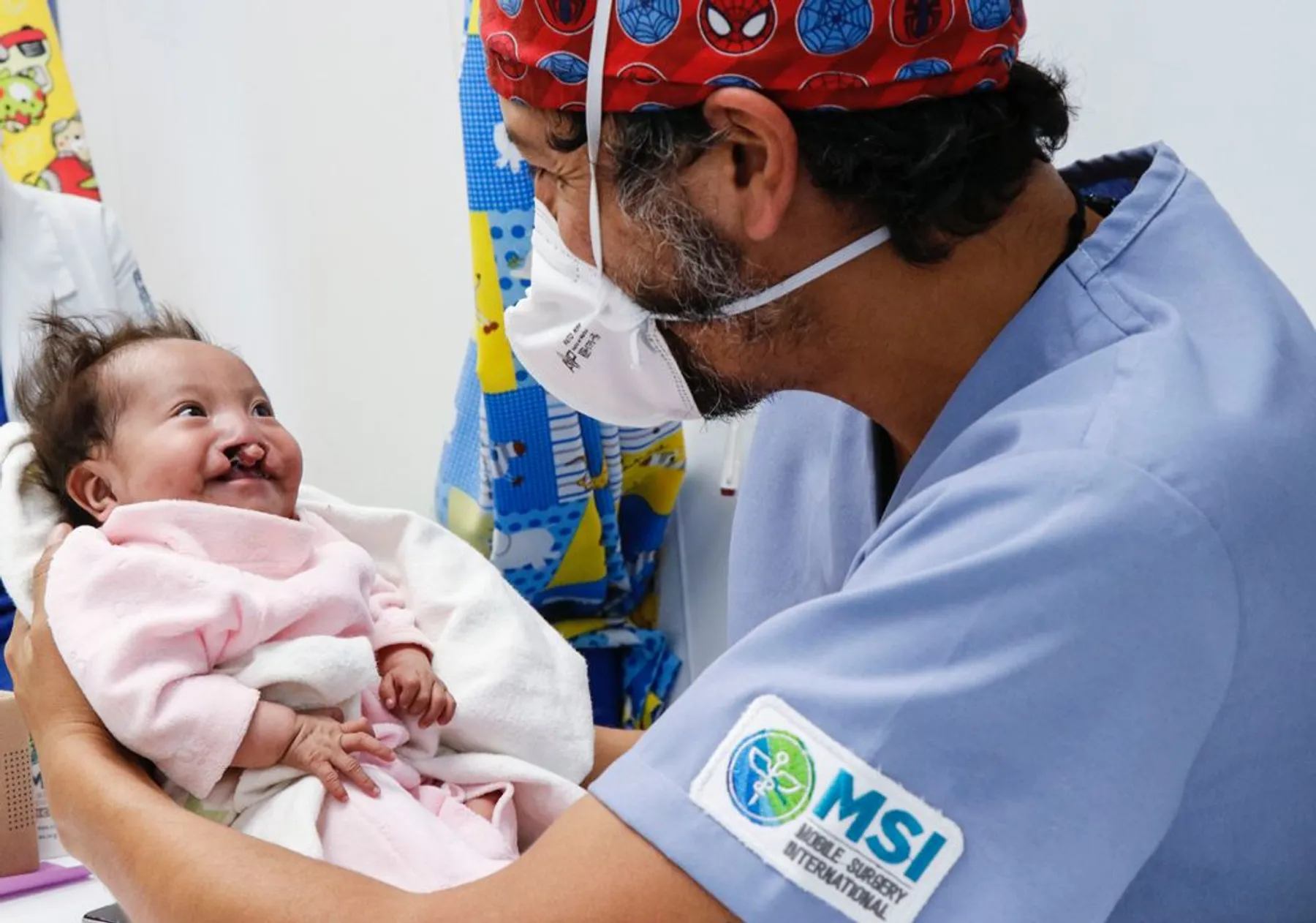
Presurgical nasoalveolar molding (NAM)
Presurgical NAM for babies with cleft lip and palate: preparing for surgery and supporting feeding from the first days of life.
What is presurgical nasoalveolar molding (NAM)?
As part of a comprehensive reconstructive strategy that begins in the first days of life, presurgical nasoalveolar molding (NAM) makes feeding easier, gradually shapes the anatomy and prepares the baby and the family for the first surgery. This creates better conditions for a precise reconstruction and helps to optimise functional and aesthetic results in the long term.
Presurgical orthopaedics (also known as preoperative orthopaedics or NAM) uses personalised intraoral plates, similar to a small dental prosthesis, to improve the anatomy of the lip, nose, gums and palate from the first days of life.
Its aim is to create better conditions for reconstructive surgery, helping to optimise functional and aesthetic results. These plates do not cause pain and can make feeding and breastfeeding easier during the first months of life.
When is presurgical nasoalveolar molding (NAM) recommended?
Presurgical nasoalveolar molding (NAM) is not necessary for every baby born with cleft lip and palate. It is recommended after a careful assessment of the anatomy, the type of cleft and the specific needs of each baby, as part of a carefully planned, comprehensive reconstructive strategy that aims for the best possible long-term results with the fewest possible interventions. It is especially indicated for babies with wide clefts of the lip and palate, marked changes in the shape of the nose, or significant alterations of the gum and palate. In these cases, the plates gradually shape the gum and palate, while nasal moulders (nasal stents) reshape the nose before surgery.
What does presurgical nasoalveolar molding (NAM) involve?
Ideally, presurgical nasoalveolar molding (NAM) treatment should begin during the first two weeks of life. The earlier it starts, the greater its capacity to shape the anatomy and prepare the baby for surgery. Through regular check-ups and small adjustments, we guide the baby's growth and development, gradually shaping the lip, nose, gums and palate. The family's involvement is an essential part of the treatment. With our support, the family learns to carry out daily care safely and with confidence. Each check-up is a small step towards a more precise surgery and the best possible long-term results.
What results can you expect?
Presurgical nasoalveolar molding creates better anatomical conditions for a more precise reconstruction, with better aesthetic and functional results. It can also make feeding and breastfeeding easier during the first months of life. It also allows the family to gain experience and confidence in daily care, preparing them to face the surgery and recovery in the best possible conditions.
See all →Dr. Nico Sierra completed his fellowship in Craniofacial Surgery and Cleft Lip and Palate at the Federal University of Paraná (UFPR), Brazil. He is a reference surgeon at Clínica Tresserra and Vall d'Hebron University Hospital, with surgical missions on four continents alongside Operation Smile.
His experience includes collaboration with Operation Smile on more than four continents, as well as a chapter published by Springer on cleft lip and palate surgery in low-resource settings.
Dr. Adriana Agell — Specialist in Orthodontics and Dentofacial Orthopaedics
Dr. Adriana Agell is responsible for presurgical orthopaedic treatment within the team. Since 2015, together with Dr. Sierra, she has been a pioneer in Spain in systematically incorporating presurgical orthopaedics and NAM into comprehensive care protocols for cleft lip and palate. With more than a decade of specific experience and a doctorate in Surgery and Morphological Sciences awarded cum laude, she combines clinical care with teaching and scientific research in presurgical orthopaedics, maxillary growth and comprehensive treatment of cleft lip and palate. This shared experience has contributed to the training of professionals through national and international courses and to co-authorship of scientific publications on presurgical orthopaedics and cleft lip and palate, supporting the development and dissemination of these techniques.

Sources and references
- Agell Sogbe A, Aseka Garcia MM, Souza Lima Wan-Dall BL, Sierra NE, da Silva Freitas R. Comparative Study of Maxillary Growth in Patients With Unilateral Cleft Treated With and Without Pre-Surgical Orthopedics. Cleft Palate Craniofac J. 2024;61(6):957–964.
- Pannaci Padrón T, et al. Functional Presurgical Infant Orthopedics in Unilateral Cleft Lip and Palate: Parallel Palatal Cleft Reduction. J Craniofac Surg. 2026.
- Pannaci T, Arteaga VL, Agell-Sogbe A, Kassam SN, Scott M. Cleft Dental Treatment and Naso-Alveolar Molding. En: Global Cleft Care in Low-Resource Settings. Springer, Cham, 2021.
Frequently asked questions about presurgical nasoalveolar molding (NAM)
These are the questions families ask us most. If you cannot find the answer you are looking for, write to us directly.
Ask a question → What is presurgical nasoalveolar molding (NAM) and what is it for?
Presurgical nasoalveolar molding (NAM) is a treatment carried out during the first months of life using a device similar to a dental prosthesis, which gradually shapes the gum, palate and nose before surgery and creates better anatomical conditions for a more precise reconstruction. It can also make feeding and breastfeeding easier during this first stage and help the family prepare for the care related to surgery.
When should NAM treatment begin?
Ideally, NAM treatment should begin during the first weeks of life, when the tissues have a greater capacity to adapt and be shaped. The earlier it starts, the greater its capacity to change the anatomy gradually, and the easier it usually is for the baby and the family to adapt. For this reason, we recommend an assessment as soon as possible after diagnosis. This lets us determine whether presurgical nasoalveolar molding is indicated and, when it can bring a benefit, plan its start at the most suitable time.
Does NAM cause pain or discomfort to the baby?
NAM is designed to shape the tissues gradually and in a controlled way, without causing pain. During the first days there may be a short period of adaptation, for both the baby and the family. Regular check-ups allow small adjustments, let us check that the plate fits correctly, and let us be with the family throughout the process. With our team, the family gradually learns to place the device and carry out daily care safely and with confidence.
What does NAM treatment involve and how long does it last?
NAM treatment is used during the first months of life, before the initial reconstructive surgery. Through regular check-ups and small adjustments, we guide the baby's growth and gradually shape the structures affected by the cleft. The length of treatment and the frequency of check-ups depend on the anatomy, the time of starting, the progress and the goals set for each patient. For this reason, the protocol is adapted to each baby individually until the right conditions for surgery are reached.
Do all babies with cleft lip and palate need NAM?
Not every baby with cleft lip and palate needs NAM: presurgical orthopaedics is neither essential nor indicated in all cases. Whether it is recommended depends on the type of cleft, the anatomy and the degree of alteration of the nose, gum and palate. It can be especially beneficial in wide clefts or when there are significant anatomical alterations. When it is indicated, it gradually improves the anatomy before surgery, can make feeding easier and helps prepare the baby and the family for the next stage of treatment. The decision is made individually within a comprehensive reconstructive strategy, aiming to obtain the greatest benefit from each treatment and to avoid unnecessary interventions.
Reviewed by Dr. Nico Sierra · Medical licence no. COMB 45307 · Reviewed: