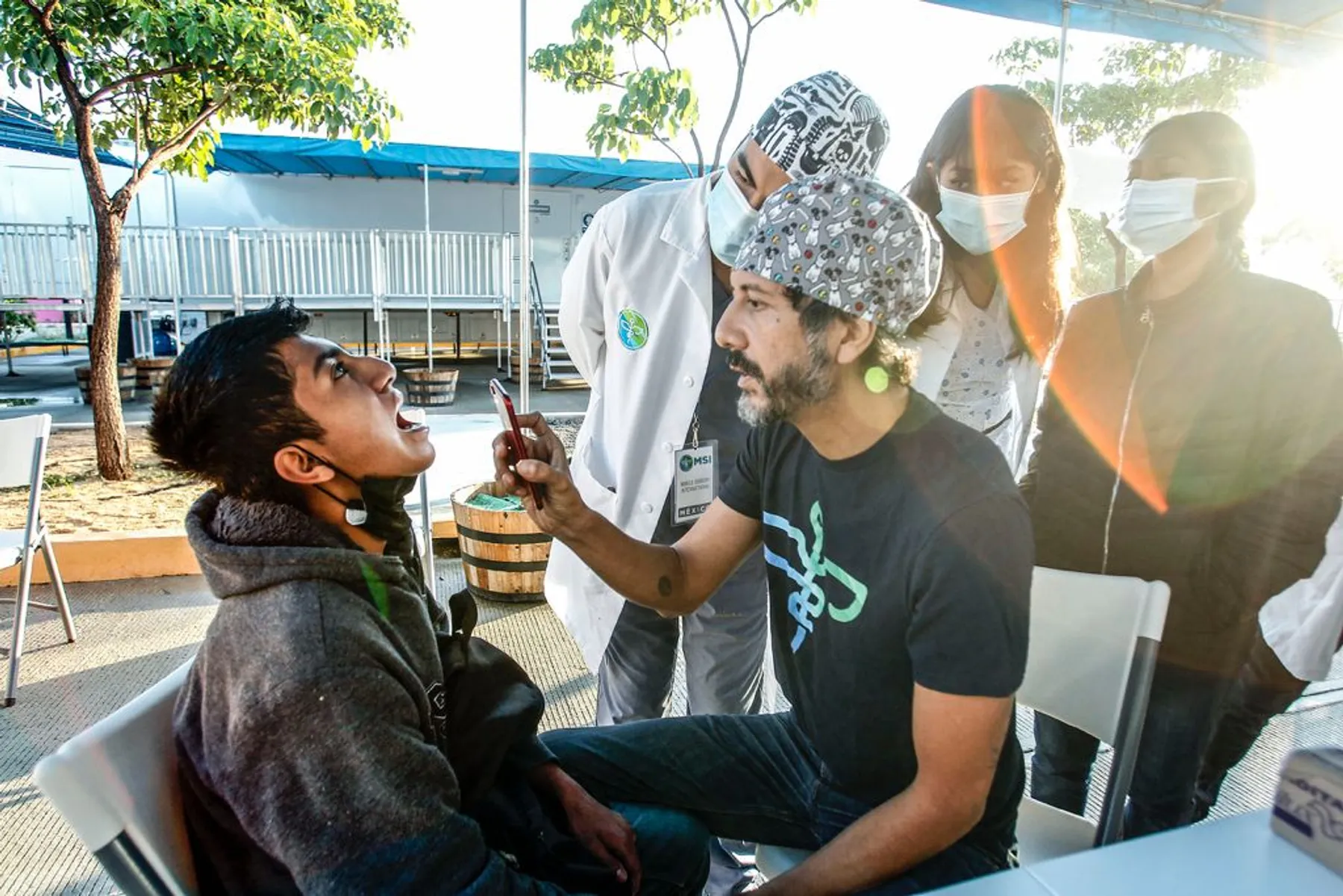
Cleft palate repair in Spain
More than 100 procedures a year in private practice, for patients with cleft lip and palate: primary palatoplasty in babies and revision surgery in children, teenagers and adults.
What is cleft palate repair?
Cleft palate repair (palatoplasty) is the anatomical and functional reconstruction of the palate, usually performed at around 12 months of age as part of a comprehensive reconstructive strategy planned from birth. Its aim is not only to close the cleft and restore the separation between nose and mouth, but to rebuild the soft palate and its muscles precisely, improving feeding and supporting healthy speech and hearing development.
Every cleft palate is different. The extent and severity of the cleft, together with each baby's own characteristics, determine an individualised surgical strategy. Dr. Nico Sierra has extensive experience in cleft lip and palate surgery and adapts different reconstructive techniques to each patient's anatomy and needs, aiming to restore the function of the palate and support natural speech development.
Surgery is planned with the long term in mind, minimising the risk of problems with speech, feeding and hearing and supporting healthy facial growth, as part of a comprehensive treatment coordinated with speech and language therapy, ENT (ear, nose and throat) and dentistry. In children, teenagers and adults who have already had surgery, Dr. Nico Sierra also performs palate revision surgery to treat fistulas, velopharyngeal dysfunction and other after-effects, restoring the anatomy and improving function.
When is cleft palate repair recommended?
Primary repair of a cleft palate (palatoplasty) is usually carried out at around 12 months of age, with the aim of supporting healthy speech development. In children, teenagers and adults who have already had surgery, revision surgery may be indicated when problems with speech, feeding or breathing persist — velopharyngeal insufficiency (VPI), oronasal fistulas. It is planned individually to restore the function of the palate and support clearer, more natural speech, making communication, social life and self-esteem easier. Dr. Nico Sierra performs primary palatoplasty and revision surgery in Barcelona, adapting the timing and techniques to each patient's needs, with a comprehensive approach aimed at supporting speech, feeding, hearing and healthy facial growth.
What does cleft palate repair involve?
Reconstructive surgery of a cleft palate (palatoplasty) is performed under general anaesthesia and usually lasts between one and two hours. Dr. Nico Sierra adapts and combines advanced, minimally invasive reconstructive techniques to each patient's anatomy, restoring the separation between mouth and nose and precisely rebuilding the muscles of the soft palate. Every decision is also made with growth in mind: the repair aims to preserve tissue and minimise scarring that could interfere with the development of the upper jaw, supporting harmonious facial growth and healthy dental and bite development in the long term, with advanced paediatric anaesthesia protocols and enhanced recovery (ERAS) that minimise pain and support early feeding. After surgery, the baby usually stays in hospital for 24 to 48 hours; after discharge, the family receives a care plan and follow-up continues with stimulation guidance and, when indicated, specialised speech therapy, alongside ENT and dental care, as part of comprehensive treatment.
What results can you expect?
The aim of primary palatoplasty is an anatomically and functionally reconstructed palate, with a stable separation between mouth and nose and muscles able to work properly during speech and feeding, minimising the risk of complications — fistulas or velopharyngeal dysfunction — and contributing to good middle-ear function. Dr. Nico Sierra's experience allows him to adapt and combine different reconstructive techniques to each patient's anatomy, with a long-term approach that preserves tissue, minimises the impact on upper jaw growth and, wherever possible, reduces the need for further surgery.
See all →Dr. Nico Sierra completed his fellowship in Craniofacial Surgery and Cleft Lip and Palate at the Federal University of Paraná (UFPR), Brazil. He is a surgeon at Clínica Tresserra and Vall d'Hebron University Hospital, with surgical missions on four continents alongside Operation Smile.
His experience includes working with Operation Smile on more than four continents, as well as publishing a chapter with Springer on cleft lip and palate surgery in low-resource settings.

Frequently asked questions about cleft palate repair
These are the questions families ask us most. If you cannot find the answer you are looking for, write to us directly.
Ask a question → At what age is a cleft palate repaired?
Cleft palate repair (primary palatoplasty) is carried out at around 12 months of age, to support healthy speech development. However, the best timing does not depend on age alone, but also on the type and extent of the cleft, the anatomy and the baby's general development. Dr. Nico Sierra assesses each case individually and plans the timing of surgery within a comprehensive reconstructive strategy, aiming to balance speech development with preserving tissue and upper jaw growth.
Which technique does Dr. Nico Sierra use to repair the palate?
No single technique suits every cleft palate. Dr. Nico Sierra adapts and combines different advanced, minimally invasive reconstructive techniques according to each patient's anatomy and specific characteristics. The aim is not only to close the cleft, but to rebuild the palate precisely and, above all, to reposition the muscles of the soft palate to support good velopharyngeal function during speech and feeding. When indicated, palate lengthening techniques can be added. Each operation is also planned with growth in mind, aiming to preserve tissue and minimise its impact on the development of the upper jaw.
Will my baby be able to speak normally after cleft palate surgery?
One of the main aims of primary palatoplasty is to create the anatomical and functional conditions needed to support natural speech development. A precise reconstruction of the soft palate muscles improves their movement and function during speech, reducing the risk of the problems associated with velopharyngeal dysfunction, such as hypernasality and compensatory articulation. However, speech development depends on many factors and continues in the years after surgery, so specialised follow-up, early stimulation and speech therapy are an essential part of comprehensive treatment.
What is recovery like after palatoplasty?
Recovery after cleft palate surgery is usually quick and well tolerated. Dr. Nico Sierra's approach combines minimally invasive techniques with advanced paediatric anaesthesia protocols and enhanced recovery (ERAS) to minimise pain and discomfort after surgery, support early feeding and make recovery comfortable for the patient and family. The baby usually stays in hospital for 24 to 48 hours, during which we monitor recovery, pain and feeding, and guide the family through the care needed before going home. After discharge, the family receives a feeding and care plan designed to protect the repair, and long-term follow-up shows whether speech therapy is needed.
What happens if difficulties with speech or eating persist after the first surgery?
If problems with speech or feeding persist after earlier surgery, a specialist assessment can identify the cause and determine whether revision surgery can improve the function of the palate. Problems such as palatal fistulas or velopharyngeal dysfunction can be treated with specific reconstructive techniques, adapted to each patient's anatomy and needs. Dr. Nico Sierra carries out an individual assessment to determine which aspects can be corrected with surgery and which need the support of other specialties, such as speech therapy, prosthodontics or ENT. When further surgery is indicated, the aim is to restore the anatomy and improve the function of the palate, to support clearer, more natural speech, adequate feeding and a better quality of life.
Reviewed by Dr. Nico Sierra · Medical licence no. COMB 45307 · Reviewed: