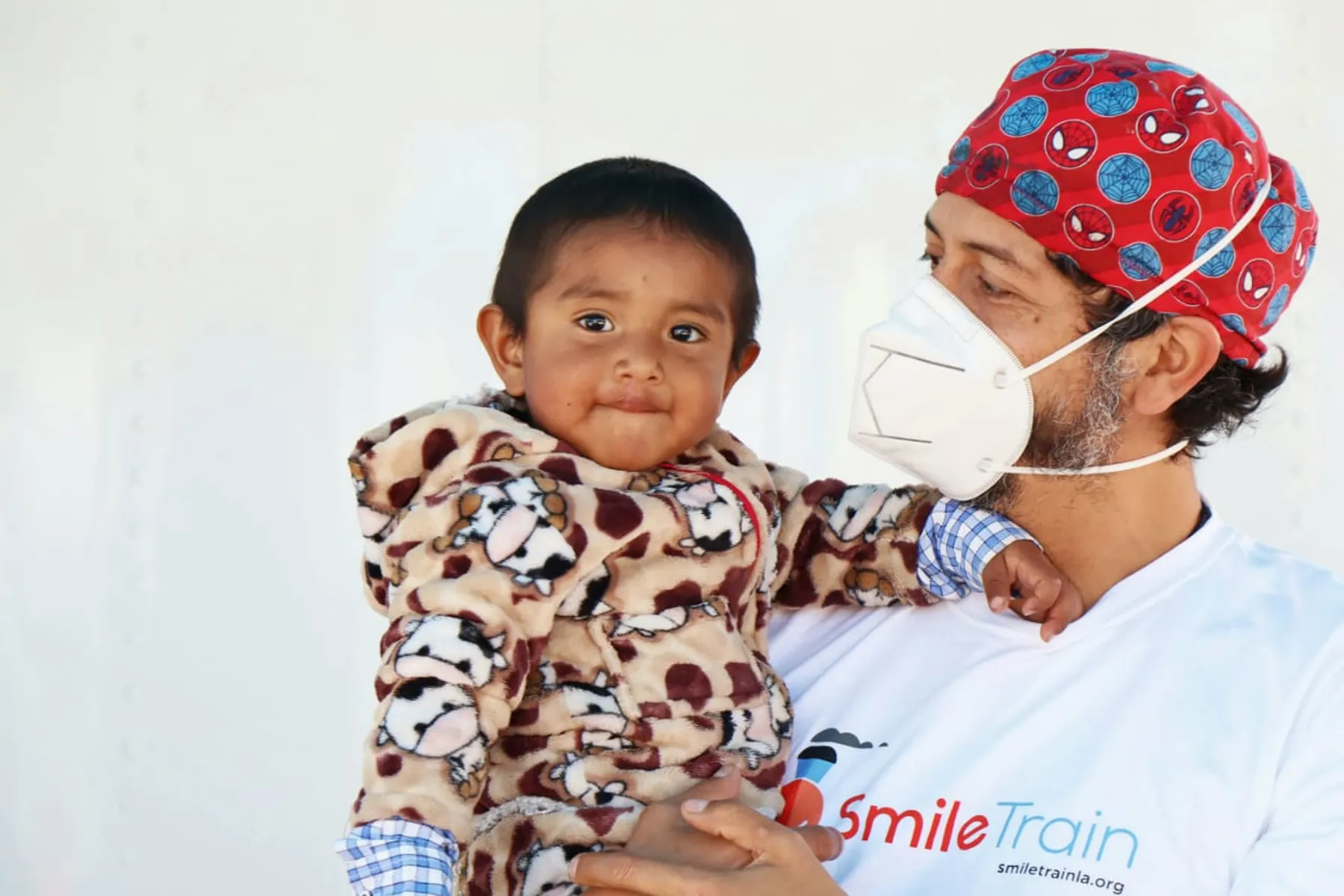
Cleft lip repair in Spain
Specialist in cleft lip repair in Barcelona. Primary surgery for babies and revision surgery for children, adolescents and adults.
What is cleft lip repair?
Cleft lip repair — primary reconstruction of the lip and nose, or cheilorhinoplasty — is usually performed at around 6 months of age, as part of a comprehensive reconstructive strategy planned from birth. Its aim is not only to close the cleft, but to reconstruct the anatomy of the lip, its muscle and the nose with precision, restoring facial harmony, improving nasal function and creating the best conditions for the baby's development.
Every cleft is different. The anatomy, the degree to which the lip and nose are affected, and each baby's own characteristics call for personalised surgical planning. Dr. Nico Sierra has extensive experience in cleft lip and palate surgery and adapts different reconstructive techniques to each patient's needs, aiming for a natural, functional result that is stable in the long term.
The first operation is planned with a view that goes beyond the immediate result: preserving facial growth, minimising sequelae and, whenever possible, reducing the need for future surgery. At the same time, it is part of a carefully coordinated treatment sequence, preparing the baby for cleft palate repair and the next stages of development. In children, adolescents and adults who have already had surgery, Dr. Nico Sierra also performs revision surgery to treat residual changes in the lip and nose, correcting the sequelae of earlier operations and improving shape, symmetry and function.
When is cleft lip repair recommended?
Reconstructive cleft lip surgery (cheilorhinoplasty) may be indicated at different points in life. In babies, primary reconstruction of the lip and nose is usually performed at around six months, when the baby's general condition and development allow surgery to be done safely; the exact timing is set individually according to the anatomy, the type of cleft and each baby's needs, within a reconstructive strategy planned from birth. In wide clefts, or those with significant changes to the nose, gum or palate, presurgical nasoalveolar molding (NAM) may be recommended first, which gradually shapes the anatomy and creates better conditions for a more precise reconstruction. Revision surgery, in turn, may be indicated in children, adolescents and adults who have already had surgery when visible scars, asymmetries or residual differences in the shape of the nose persist and affect shape, symmetry or function; each case is assessed individually to determine what can be improved and when. Dr. Nico Sierra performs both primary cleft lip repair and revision surgery in Barcelona, adapting the planning and technique to each patient's anatomy, age and needs.
What does cleft lip repair involve?
Reconstruction of the lip and nose (primary cheilorhinoplasty) begins well before the operating theatre: every baby has a unique anatomy, so the surgery is planned individually, taking into account growth and the next stages of treatment; when indicated, this preparation may include presurgical nasoalveolar molding (NAM). The operation is performed under general anaesthesia and lasts approximately two hours: Dr. Nico Sierra adapts and combines advanced, minimally invasive reconstructive techniques according to each baby's anatomy, reconstructing the lip and nose with precision. In complete clefts, nasal reconstruction is especially important — advanced primary rhinoplasty techniques reposition the nasal structures and rebuild the floor of the nose, improving symmetry and breathing function and establishing a proper separation between the mouth and the nose. The approach combines minimally invasive surgery with advanced paediatric anaesthesia and enhanced recovery (ERAS) protocols, minimising postoperative pain and discomfort and encouraging early feeding. After surgery, the baby usually stays in hospital for 24 to 48 hours, during which recovery, pain and feeding are monitored and we guide the family through the first days of care; follow-up continues after discharge to achieve the best possible healing.
What results can you expect?
The aim of primary cheilorhinoplasty is for the lip and nose to look natural and balanced, blending harmoniously with the baby's face, restoring anatomy and breathing function and leaving a scar that is as discreet as possible, while respecting the growing structures. Dr. Nico Sierra's experience allows him to adapt and combine different reconstructive techniques according to each baby's anatomy, aiming in every case for a reconstruction planned with a long-term view, which minimises sequelae and, whenever possible, reduces the need for future revision surgery.
See all →Dr. Nico Sierra completed his fellowship in Craniofacial Surgery and Cleft Lip and Palate at the Federal University of Paraná (UFPR), Brazil. He is a reference surgeon at Clínica Tresserra and Vall d'Hebron University Hospital, with surgical missions on four continents alongside Operation Smile.
His experience includes working with Operation Smile on more than four continents, as well as the publication of a chapter in Springer on cleft lip and palate surgery in low-resource settings.

Frequently asked questions about cleft lip repair
These are the questions families ask us most. If you cannot find the answer you are looking for, write to us directly.
Ask a question → At what age is a cleft lip repaired?
Cleft lip repair of the lip and nose is usually performed at around six months of age. However, the ideal timing depends not only on age but also on the baby's growth, anatomy and general condition. Dr. Nico Sierra assesses each case individually and plans the timing of the operation within a comprehensive reconstructive strategy, aiming for the best conditions for surgery and the best long-term results.
What technique does Dr. Nico Sierra use for cleft lip repair?
For cleft lip repair, Dr. Nico Sierra adapts and combines different reconstructive techniques according to each patient's anatomy and specific characteristics. His approach integrates advanced, minimally invasive techniques, combining aesthetics, function and growth to reconstruct the lip and nose with precision. The aim is a natural, balanced appearance, proper breathing function and a scar that is as discreet as possible, while respecting the growing structures and supporting harmonious facial development in the long term.
Can the lip or nose be operated on again if the result is not satisfactory?
Yes, repeat surgery on the lip or nose is possible: Dr. Nico Sierra is a specialist in revision surgery of the lip and nose in patients with cleft lip and palate, and children, adolescents and adults can benefit from a new operation when aesthetic or functional problems persist after earlier surgery. After an individual assessment, Dr. Nico Sierra designs a multidisciplinary treatment plan and a revision surgery strategy adapted to each patient's needs, aiming to restore a natural, balanced facial appearance, improve function and leave scars that are as discreet as possible. Although revision operations tend to be more complex, specialist planning and a precise reconstructive technique can achieve significant aesthetic and functional improvements, with a positive impact on self-esteem and quality of life.
What is recovery like after cleft lip repair?
Recovery after cleft lip repair is usually quick and well tolerated. Thanks to minimally invasive techniques and advanced paediatric anaesthesia and enhanced recovery (ERAS) protocols, postoperative pain and discomfort are minimised and early feeding is encouraged. The baby usually stays in hospital for the first 24 hours, during which pain is monitored, feeding is adapted and we guide the family through caring for the wound. Swelling gradually goes down over the following days and weeks, and the scar continues to evolve and mature over the following months, which is why follow-up is important to achieve optimal healing.
Does cleft lip repair also include reconstruction of the nose?
Yes, cleft lip repair often includes reconstruction of the nose. In many patients, primary surgery includes nasal reconstruction (primary cheilorhinoplasty). As well as improving its external shape, primary rhinoplasty allows the internal structures of the nose to be carefully repositioned, aiming for a natural, balanced appearance and proper breathing function from the earliest stages of treatment. In complete clefts, Dr. Nico Sierra uses contemporary reconstructive techniques that also address the nasal floor and the front part of the cleft; in selected cases, techniques such as the vomer flap rebuild this separation between the oral and nasal cavities, preparing better conditions for the later palate surgery.
Reviewed by Dr. Nico Sierra · Medical licence no. COMB 45307 · Reviewed: