Rebuilding the gum — alveolar bone graft
An alveolar bone graft rebuilds the gum in people with cleft lip and palate, helping to restore the smile and preparing the next stages of treatment.
What is gum reconstruction with an alveolar bone graft?
An alveolar bone graft (gum reconstruction) is a surgical procedure for people with cleft lip and palate whose cleft affects the gum. It is usually carried out between the ages of 6 and 12, before the permanent teeth next to the cleft erupt, especially the lateral incisor and the canine. In certain cases it can also be done at later stages of development.
The aim is to rebuild the bone of the gum to restore the continuity of the upper jaw, support the proper eruption of the permanent teeth and create the best conditions for a functional, stable smile. To achieve the best results, it is essential that the patient has good oral health, with no cavities or active infections. In most cases, orthodontic treatment is needed before and after the surgery.
Every patient has a different anatomy and pattern of development. Dr. Nico Sierra plans the timing of the operation individually, coordinating treatment with paediatric dentistry and orthodontics. Gum reconstruction goes beyond the bone graft itself: when indicated, it makes rehabilitation with dental implants or orthognathic (jaw) surgery possible, contributing to a natural, functional and stable smile in the long term.
When is gum reconstruction with an alveolar bone graft recommended?
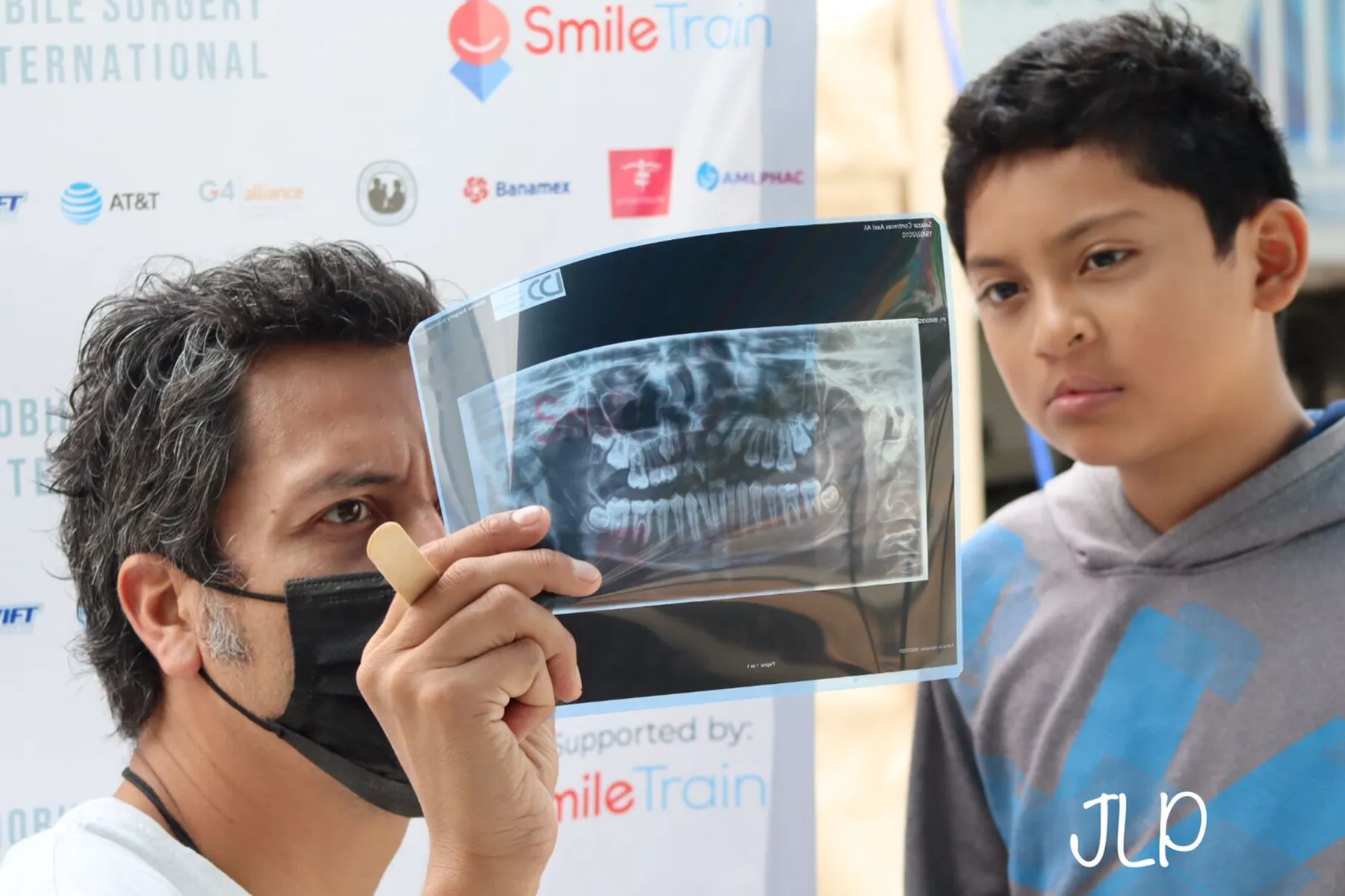
The ideal time for an alveolar bone graft does not depend on age alone, but on the development of the permanent teeth. Regular X-ray checks make it possible to identify the best moment, usually between 6 and 10 years of age, before the lateral incisor and the permanent canine next to the cleft erupt. If one of these teeth has already erupted, the graft is still possible, although it usually requires specific orthodontic preparation to move the teeth towards the reconstructed area. When teeth are congenitally missing (agenesis) or have been lost in the area of the cleft, the alveolar bone graft creates the support needed for rehabilitation with dental implants, when indicated. For the best results, excellent oral health before surgery is essential, with no cavities, bacterial plaque or periodontal disease, together with paediatric dental follow-up and orthodontic planning by professionals with specific experience in cleft lip and palate.
What does gum reconstruction with an alveolar bone graft involve?
Gum reconstruction with an alveolar bone graft begins long before the surgery: the success of treatment depends on proper preparation by paediatric dentistry and orthodontics, together with radiological follow-up that identifies the best moment to operate. The surgery is performed under general anaesthesia and rebuilds the gum by placing a bone graft in the area of the cleft, creating stable support for the eruption of the permanent teeth and restoring the continuity of the upper jaw; Dr. Nico Sierra uses digital planning to carry out the reconstruction with greater precision. The approach combines minimally invasive techniques with optimised anaesthesia and recovery protocols (ERAS) to minimise pain and support a quick recovery. When indicated, the patient's own bone is used, usually taken from the iliac crest or the chin — the standard of care because of its predictable, long-term stable results. The patient usually stays in hospital for one night; after discharge, treatment continues with an adapted diet, careful oral hygiene and joint follow-up by paediatric dentistry and orthodontics.
What results can you expect?
The aim of an alveolar bone graft is to rebuild the gum and create the best conditions to restore the smile. The surgery supports the proper eruption of the permanent teeth and, when indicated, allows rehabilitation with dental implants at later stages of reconstructive treatment. Dr. Nico Sierra's experience in the comprehensive treatment of cleft lip and palate makes it possible to plan the best moment for the operation and to coordinate the surgery closely with paediatric dentistry and orthodontics, adapting each treatment to the anatomy and development of each patient, with natural, functional results that are stable in the long term.
See all →Dr. Nico Sierra completed his fellowship in Craniofacial Surgery and Cleft Lip and Palate at the Federal University of Paraná (UFPR), Brazil. He is a surgeon at Clínica Tresserra and Vall d'Hebron University Hospital, with surgical missions on four continents alongside Operation Smile.
His experience includes collaboration with Operation Smile on more than four continents, as well as a published chapter with Springer on cleft lip and palate surgery in low-resource settings.

Frequently asked questions about gum reconstruction with an alveolar bone graft
These are the questions families ask us most. If you cannot find the answer you are looking for, write to us directly.
Ask a question → When should an alveolar bone graft be done?
The ideal time for an alveolar bone graft does not depend on age alone, but on the development of the permanent teeth. Clinical and X-ray checks make it possible to identify the most suitable moment for surgery, usually between 6 and 10 years of age, before the teeth next to the cleft erupt. Dr. Nico Sierra plans each case individually and coordinates treatment with paediatric dentistry and orthodontics, so that the operation takes place at the moment that offers the greatest chance of success.
Is orthodontic treatment needed before an alveolar bone graft?
In most cases, yes: orthodontic treatment before an alveolar bone graft prepares the gum and the position of the teeth, and it continues after the graft to guide eruption and complete the reconstruction of the smile. The success of treatment depends on coordination between surgery, orthodontics and paediatric dentistry, so it is advisable for the whole process to be planned by professionals with specific experience in cleft lip and palate.
Where does the bone for the graft come from?
The bone used for an alveolar bone graft is usually the patient's own, which Dr. Nico Sierra takes from the iliac crest or the chin. Autologous bone remains the standard of care because it offers the best integration and the most predictable, long-term stable results, and the donor site is chosen individually according to each patient's characteristics. In selected cases, biomaterials and regenerative therapies can be used to complement bone reconstruction, such as bone morphogenetic proteins (rhBMP-2), biocompatible bone substitutes or autologous growth factor concentrates, always assessed individually according to the best scientific evidence available.
What happens if the permanent teeth have already come through or a tooth is missing?
If the permanent teeth have already come through or a tooth is missing, an alveolar bone graft is still possible, although the ideal moment is before the permanent teeth erupt. In these cases, specific orthodontic preparation is usually needed to reposition the teeth and restore the smile. When teeth are congenitally missing or have been lost in the area of the cleft, the graft rebuilds the bone needed for rehabilitation with dental implants, when indicated.
What results can be expected from an alveolar bone graft?
The results of an alveolar bone graft are a rebuilt gum and the best conditions to restore the smile. The surgery supports the eruption of the permanent teeth, makes orthodontic treatment easier and, when indicated, allows rehabilitation with dental implants. Each treatment is planned individually within a comprehensive reconstructive strategy, aiming for natural, functional results that are stable in the long term.
Reviewed by Dr. Nico Sierra · Medical licence no. COMB 45307 · Reviewed: